The SUMMIT Newsletter
July 2025
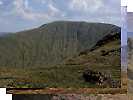
Photo: From An Cnapán Mór, Central Dingle, by Shane Ringwood

Introduction and contents
MountainViews newsletter for hillwalkers and hikers in Ireland

Ukraine Flag

Congratulations, you have found your way to our new format newsletter. Detail here. It will work on mobile devices as well as laptops and desktops.


This newsletter reports the sad news of the untimely death of Brendan O'Reilly who was so involved in the creation of MountainViews and its Quarterlies and Annuals - see obituary.


The show goes on and in this issue we feature what people have shared about visiting various different summits around Ireland. We have our usual pictures selected month by month from the many sent in and we have feature articles such as one on Kippure a place that many of us have visited. There's another on the Welsh County Highpoints, some notes on Challenge Walks etc.


Suggestions welcome for the new newsletter

Table of Contents

Pictures of the Month

↑ Table of Contents
Killary Harbour

Brendan O'Reilly (1961-2025)

A Prince of the Mountains

Have you ever found yourself standing at the bottom of a high, precipitous and rugged peak, fearful of the daunting task it will be to make it to the summit? That's exactly how I felt when Simon Stewart asked me to write this obituary for Brendan O'Reilly (aka madfrankie), my closest friend for 40 years and a huge contributor to MountainViews and to hillwalking in general. The challenge to do justice to Brendan and his achievements seems challenging in the extreme. But one step at a time, here goes.

"A huge contributor to MountainViews and to hillwalking in general."

Back in the late nineties, I was regularly bemused by Brendan's obsession with the outdoors and the sport of hillwalking. Every now and again, when we'd arranged to meet for a pint, Brendan would turn up having come directly from, what seemed to me, some outlandishly long and difficult trek in the pouring rain across the mountains. His clothes and boots would be mud-spattered and he would look and sound totally exhausted. What satisfaction, I wondered, could anyone possibly garner from putting oneself though such misery? What I didn't know, and would soon learn, was that besides the muscle pain and fatigue, Brendan was also experiencing a sense of exhilaration and personal accomplishment that I rarely felt.

Brendan walking in the West Cork Mountains

Brendan walking in the West Cork Mountains.

The Call of the Wild

Eventually my curiosity got the better of me, and I began to inquire about his, to me, strange infatuation with the outdoors and 'peak-bagging'. So one Sunday, Brendan took me on a walk up Djouce in Wicklow. Although this is a highly popular route up good trails, and is regularly trekked by hundreds of weekend walkers, to me, a total city slicker, it was an odyssey into the remotest wilderness and a journey of personal discovery! I had been bitten by the hillwalking bug and I have Brendan to thank for it.

Not long after this, Brendan introduced me to the website MountainViews.ie and explained the mysteries of 'peak-bagging' aka 'summiteering'. And within a few years, we had both become directly involved with MountainViews, becoming part of the very first committee that Simon coordinated to help with the running of the vast website. In the years that followed, Brendan would make an enormous contribution to MountainViews, and in so many ways his loss to his family, friends, and to the MountainViews community is incalculable.

Brendan, the author, and Peter Walker at the summit of Torc Mountain

Brendan, myself and Peter Walker at the summit of Torc Mt. on the day Simon bagged his last Arderin. Thanks to Brendan and Simon, I too was bitten by the hillwalking bug.

(Incidentally, I once asked Brendan why he chose the sobriquet 'madfrankie' for his MV persona. As I recall it, Brendan did a tour of gangland London once, the tour guide being none other than the former, but reformed, 1960s gangster 'Mad' Frankie Frasier, so he duly borrowed the nickname, having spent his early years growing up in London not far from where the dastardly Mad Frankie conducted his 'business.')

The Height of Modesty

When the original Arderin list was first standardised in 2009, (500m+ with a prominence of 30m), there were a total of 404 tops to be climbed. Brendan took on the challenge with relish. He would regularly set off on epic walks across the Reeks or the Maamturks or the Comeraghs or the Cahas, and on many of which I was lucky enough to accompany him. Thanks to Brendan, for the first time I experienced stunning views that most people never even glimpse, startling displays of weather with dramatic clouds pierced by shafts of sunlight, rainbows so vivid you felt you could pluck them from the sky, white cloud tumbling over precipitous cliffs, bounding red deer with antlers higher than a man, eagles soaring just twenty metres above our heads, and swaying seas of purple heather, massed foxgloves, and yellow furze carpeting the landscape in spring.

Madfrankie on the Shira Plateau approaching Kilimanjaro

'Madfrankie' admires a breathtaking view from the Shira Plateau as he made his approach to Kilimanjaro.

"His knowledge of the wilds was like that of a famed botanist or ornithologist."

Brendan was also a treasure trove of information on the wilds. As birds exploded from the heather on our approach, he would enlighten me by telling me it was a hen harrier or a red grouse, or he would point out heath spotted-orchids, bog rosemary or sundews. His knowledge of the wilds was like that of a famed botanist or ornithologist, but he would dismiss my compliments on his expertise with a modest grunt. And that modesty in so many ways defined Brendan.

The Summit of Irish Hillwalking

One by one Brendan ticked off the Arderins, all while working full time as an art director in the advertising industry. He once rose at 3am to drive to the Nephin Beg range to bag Ireland's most isolated peak, Slieve Carr, and was back home in Lucan just in time for bed and work the next day! Brendan's wife, Bernie, who herself is an accomplished hillwalker and landscape photographer, would often accompany Brendan on his forays into the wilderness. And she also did so on the day he bagged his final Arderin. And at 10.49 am on Tuesday 27th of November, 2012, Brendan clambered the final few steps to the top of Tooth Mountain in the Cahas to bag his 404th, becoming the first hillwalker to complete this, the definitive Irish hillwalking list.

Brendan at Tooth Mountain, his 404th Arderin

Sweet tooth! Brendan's 404th Arderin. This is the only time I every saw Brendan raise his arms in celebration!

Having accomplished such a feat, (we guesstimated that all the Arderins combined are a total ascent of roughly 200,000 metres), most people would inform the world through Facebook, Instagram or Twitter and then happily accept the plaudits. But Brendan did none of that. In fact he didn't even record the moment on MountainViews.ie, and if you check out the posts for Tooth Mountain, you'll find no write-up or photo informing the hillwalking community of what he'd achieved, and only a handful of other hillwalkers were aware he'd become the first Arderin completer. He merely ticked off the top and saw his 'madfrankie' pseudonym as the lone highlighted one under the Arderin list in the Summiteers Hall of Records. Brendan truly scaled the heights of modesty. He did not do it for acclamation or glory, merely for his own sense of personal accomplishment.

Brendan and Donal sitting atop the Hag's Tooth in the Reeks

Don't look down! Brendan and our mutual friend Donal sitting atop the Hag's Tooth in the Reeks.

An exemplar…in all walks.

But there was much more to Brendan than his hillwalking abilities. As an MV Committee member, he also took on the role of designer-in-chief, using his considerable skills to painstakingly produce and lay out our quarterly newsletters and our printed annual. Many of you will have bought these annuals down the years and I'm sure you'll agree that they are professional in the extreme. They are sleek 60-page productions that would do any commercial publishing house proud. In fact, most magazines you might pick off a newsagent's shelf would be the work of a large team of art directors, designers and planners, yet Brendan produced our annual and quarterly newsletters entirely on his own, while all the time working full-time, attending to his adoring family and household, pursuing his love of trading in old vinyl records and yet still finding time to escape to the hills whenever he could.

And besides the newsletters, Brendan also single-handedly designed and produced MV's published book 'A Guide to Ireland's Mountain Summits.' And then there were the awards certificates, the MountainViews logo, our event display banners and countless other bits and pieces necessary for the monthly running of the website and associated events. And as madfrankie, he contributed countless write-ups on hill and mountain routes to MV, particularly in the Dartry, Ox and Breifne Mountains, (he being from Belturbet in Cavan) and also on the mountains of Donegal (from where Bernie hailed.)

Book designed and compiled by Brendan for MountainViews

Brendan also designed and compiled MV's published book, which is still selling a decade on!

A Head for the Hills

Besides having been the first Arderin completer, Brendan was closing in on multiple other lists, including the Vandeleur-Lynams, the Arderin Begs and the Carns. He could also boast (not that he would) having bagged 58 Munros, 41 British Marilyns and 71 British 600m+, including the highest peaks in Ireland, Northern Ireland, Scotland, Wales and England.

Four friends at the pinnacle of Ireland

We four great friends regularly shared many a long and epic adventure in the wilds, such as this one a few years back, which took us to the pinnacle of Ireland. (Left to right, Brendan, Stephen McKeon, Donal O'Dea (aka dodser) and me, Colin Murphy.)

A Friend in High Places

"What an imprint your footsteps have left on our hearts."

But when I remember Brendan now, it is not his hillwalking and design achievements, impressive as they were, that immediately spring to mind. It was his commitment to his family and his innate decency, honesty, intelligence, modesty and endless wittiness that made him the best and closest friend any other human has the right to ask for, a friendship that was made all the stronger for the time we spent together wandering across the mountains in the wilderness. He will be terribly missed by Bernie and his children, Vinnie and Izzy, by myself and all of his other hillwalking friends including Simon, Donal and Stephen, and also by all the members of MountainViews.ie, to whom he gave so much and asked nothing in return.

Brendan and Vinnie

Brendan and his son, Vinnie in Scotland as they plan a day's Munro-bagging.

I will end as I did his eulogy at his recent funeral, with a quotation from an American writer called Dorothy Ferguson, which in so many ways sums up the loss of Brendan to his family, friends and colleagues.


'You walked with us for too brief a time, but what an imprint your footsteps have left on our hearts.'


-- Colin Murphy

Recent User Posts

↑ Table of Contents

Track of the Months

All he surveys

Map of the area for Track of the Month

Map of the area

This newsletter's selection sees simon3 at the north end of Connemara's fabled Maumturks, and reaffirming an Arderin summit, Leacan. A lot of work goes in to checking out these marginal tops, but if a job's worth doing, etc etc etc. And it's a good introduction to the area.

simon3 on A circuit of Leenaun Hill.
The start uses the Western Way to ascend and to reach the col between Búcán and Leacan. The reason for going this way| walk, Len: 11.3km, Climb: 668m, Area: Leacan, Maamturks (Ireland) Leacan, Mea ... Click here ...";

Comment of the Months

Pastoral Perfection

Trig on Limestone, Mast on Truskmore

Trig on Limestone, Mast on Truskmore

In a superb and interesting post of April 12 last, geo evokes a very lyrical and highly detailed description of a trek on Leean Mountain, a carn in Lovely Leitrim. geo's title: Ireland's Best Small Hill.

Ireland's Best Small Hill
The title of this comment says it all about my experience. I won't labour the practicalities of how to get to it, it's well laid out by others, and straightforward to follow.
Getting back to the question posed, this hill was so ahead of any expectations. I have had many visits to the area, in fact, it's where I cut my metaphorical hillwalking teeth as a student 30+ years ago in Sligo. I hadn't been on this particular one, and as the weather has been glorious the last weeks, and I wanted to get out, I drove up after work on a Friday knowing the evenings were long enough. I brought my camping paraphernalia and boy was I glad I did!
I followed the little green lane up through flocks of ewes with their new lambs, as I sweated in the heat of the first warm spell of 2025. There was lots of bared limestone, green grass, stunted hawthorns and little knolls and vales about me, while further afield I could see Lough Gill, Sligo town, the mast on Truskmore, and assorted hills and mountains many of which I've been on before.
The trig when I reached it had a little poo sat upon it, likely from a bird of probably larger dimensions, perhaps a buzzard, and my imagination saw said bird as it circled this place. I found a little green lawn, tent sized among the limestone, pitched up, and had my supper watching the sun slide down over Keelogyboy, while behind me, an almost full moon rose over the trig.
The whole scene, the fantastic light, the change from day to night, the glorious views aroundabout put me in a philosophical frame of mind, and I felt like it was a moment which will live in memory for me evermore.
The following morning, although cold and breezy, was no less beautiful, and the return walk to my car no less thoughtful, as I felt grateful to Providence for what was one of the most spiritual visits to a hill I've ever had.
I hope those who follow my footsteps are similarly overwhelmed.

North

3 days dry in Donegal - is this a record?

No gaiters, dry boots, blue skies and spectacular 360 degree views while bagging Aghla Beg South Top, reports member nupat.

nupat on Aghla Beg South Top An Eachla Bheag (mullach theas):
Starting from the Muckish Gap there is a well worn path for most of this walk. Conditions were very dry after some weeks of warm, sunny weather. We spent 3 days walking in Donegal, no rain, no gaiters needed. How often can that be said. Track MV5311 uploaded. Early on we came across some fencing, perhaps some of it is relatively new. Thankfully nice stiles are provided. We advise crossing to ... ... Click here ...";

Benbo, The Two Of Us Need Look No More

An afternoon from the relative Leitrim fleshpots of Manorhamilton sees markwallace wending his way along country lanes to an ascent of the substantial and relatively solitary eminence of Benbo. A fine time was had by all (all one of them) with the odd little directional error just adding to the fun. A good example of how the hillwalker can make some creative use of their public transport options.

markwallace on Manorhamilton town centre to the summit of Benbo
I climbed Benbo from Manorhamilton, first for 1.5 km along the N16 (Sligo Road), which doesn't have a hard shoulder | walk, Len: 14.8km, Climb: 459m, Area: Benbo, Dartry Mountains (Ireland) Benbo ... Click here ...";

The island with street cred

The remote Rutland Island in Donegal presents visitors with the unusual sight of a complete street of abandoned houses, called Duck Street, in the 18th century, writes Fergalh.

Fergalh on Rutland Island Inis Mhic Doirn:
Landed at pier and headed inland to high point which is a high sand dune. There are a few unusual historical points about the island. Firstly it was named Rutland Island after Lord Rutland but all locals call it Inis Mhic Dorin. Secondly a street was randomly built near one of the three jettys which is mostly restored in the 1780's called Duck Street. And finally the infamous Nappy Tandy spent thr ... ... Click here ...";

Scotland views

Antrim's highest, Trostan, afforded member slemish great views of Scotland's west coast having discovered a must drier and simpler approach.

slemish on Trostan Trostán:
Is it really 16 years since I last stood on Antrim's highest mountain? The usual eastern approach via the Moyle Way is too wet and long in my opinion. I have found a much shorter, drier route approaching Trostan from the western side. Park at a lay-by opposite a gate on the Old Cushendun Road at D1600 2275. From this gate a stony track curves around the side of neighbouring Slievenanee for about 1 ... ... Click here ...";

Stackful of Hollow

Your track reviewer has ventured into the heart of the wonderfully tangled interior of Donegal's Bluestacks for a few typically rough and trackless summits to the north of the road through the Barnesmore Gap. Many possibilities start from here, and there's much scope for adding other tops to this itinerary; as it stands, it was a fascinating half day in the hills

Peter Walker on Croaghnageer and Croghanirwore
An underrated component of the hillwalker's skillset is resilience. You can be navigationally competent (after 40 odd y| walk, Len: 13.4km, Climb: 660m, Area: Croaghnageer East Top, Bluestack Mountai ... Click here ...";

West

In the neigbourhood

Garraun South Top is an unremarkable grassy mound, but its close neighbour, Altnagaighera, is a much more defined and interesting top, writes Simon3 in a new updated short summary.

group on Garraun South Top Maolchnoc (mullach theas):
Garraun South Top is situated in the less-visited northern half of the Twelve Bens, separated from the more prominent hills by the N59. It lends itself well to being combined in routes with other hills, particularly Benchoona and Garraun itself, but also Doughruagh further southwest. The summit itself is an unremarkable grassy mound marked only by a handful of stones. 800m out the western spur ... ... Click here ...";

I've Gotta Get A Letterettrin To You

It's often the case that lower altitude hills in the midst of higher mountains provide the best overview of a landscape. So it proves with glencree's track ascending relatively modest Letterettrin on the south shore of Killary Harbour, with superb vistas of the Turks, Mweelrea and the western seaboard. A bit soft underfoot, mind you.

glencree on Letterettrin - a perspective on the N Connemara peaks
Park at L81005 61429, where there was space for 2 cars. The road leads in to Killary Harbour where there is a large mu| walk, Len: 9.2km, Climb: 325m, Area: Leitir Eitreann, Twelve Bens (Ireland) L ... Click here ...";

The path of least resistance

Member TommyV identifies a route to avoid the treacherous south face of Knocknagussy in the Partry & Joyce area.

TommyV on Knocknagussy Cnoc an Mháma:
To pick up on the comments made by Colin Murphy, the parking at L97931 52207 is still available, there is a gate but theres plenty of room to park a car. The approach from the South means there is a very steep face so as Colin mentioned, heading along the path of least resistance to L99049 52886 avoids the gully and the very steep ground. Be careful on the way down. ... Click here ...";

A race to finish

Finish Island in Galway may be reached on foot and sports stunning golden beaches, writes Fergalh, but get your running boots on to beat the tide safely.

Fergalh on Finish island Oileán Finis:
A short distance past the Tobar Muire is the beach between Cill Chiaráin and Carna. A short walk over the sand leads to this most interesting flatish island with wonderful beaches. Mostly ruined houses and a couple being restored as holiday houses. Worth a visit but the tide window is quick so be sharp ! ... Click here ...";

South

Off the beaten track

Knocknagree East Top in the Cahas is a good 5.5km trek from the car, but luckily a fine track takes you within 1km of the summit, which offers wonderful views, writes Colin Murphy.

group on Knocknagree East Top Cnoc na Groí (mullach thoir):
Usually done in conjunction with other tops such as Knocknagree itself, but this rather remote top may be done in isolation from, for example, the south. Parking for several cars to be had on the R572, outside Rossmacowen Church at V74202 47176 (assuming no mass/funeral etc taking place.) Walk up the tarred road for about 1km to V73877 47731, passing farm buildings (the amenable farmer has previou ... ... Click here ...";

Friendly farmers

Two friendly farming folk were welcoming and helpful to Leatra and friends as they ascended the lovely and remote Douce Mountain in West Cork.

Leatra on Douce Mountain Damhais:
Climbed Douce and Doughill together, having parked at W13389 62823 per thomas_g's comment and following fairly closely to Track 4520 by eamonoc. A farmer in his van gave us a wave as we were getting our boots on. A minute later, a lady (whose brothers, she said, own the land) drove by and held the gate open for us. She was happy to point us toward the bridge and track near Thomas's W12957 62721. H ... ... Click here ...";

Lacks for nothing

Stunning views, a well-defined top and a track that takes you within 500m of the summits make Coomnalack a very fine Carn indeed, writes Colin Murphy.

group on Coomnalack Top Cnoc Chom na Leac:
Often done in conjunction with other tops like Coomnadiha, but may also be done in isolation. One approach is possible from the north, parking at Gleninquachin Park at V85686 62266. This is privately owned land and there is a reasonable fee for parking here and using the trails. From here a 4.5km trail follows a curving route east then south around Cummeen Tadgh Lough, above a beautiful waterfall, ... ... Click here ...";

Lots of rough, not much smooth

The hills of Kerry and Cork aren't underendowed in the roughness department, and Bennaunmore is one of the roughest of them all according to Colin Murphy, with all manner of natural and man-made trials to be overcome just to get to the bottom of the mountain, never mind the pathless complexity awaiting above. The views are sensational however, and the (very) resilient could link this to Crohane to the east, or the Mangerton range to the west.

Colin Murphy on Very tough and long trek over rough terrain.
This was definitely among my personal top 5 most difficult Carns. 5.5km from car to summit, much of it on unpleasant ter| walk, Len: 11.0km, Climb: 583m, Area: Bennaunmore, Mangerton (Ireland) Bennau ... Click here ...";

East

A ringside seat

A pleasant Sunday walk up granite steps and along woodland trails was had by hibby & co as they ascended Prince William's Seat in Dublin to enjoy fine sea and landscape views.

hibby on Prince William's Seat :
The walk up along the Wicklow Way from Curtlestown is a firm and well-maintained path, with granite steps installed on the steeper sections. Pleasant walk through woodland with lots of birdsong in early summer. A crossroads in the track at O18419 17904 offers a right turn signposted as "Nellie's Way" to Raven's Rock. A few metres further along, a left turn at O18409 17948 takes you west towards th ... ... Click here ...";

Simple, short & dull!

35 minutes will see you up and down the unexciting Ballyhook Hill in Wicklow, which is partly through planted fields, writes Colin Murphy.

group on Ballyhook Hill :
A simple, unexciting hill, that should take you about 35 minutes up and down. There is parking aplenty to be found on the edge of Stratford village at S88850 93840. Walk 300m west along road to double gates on right at S8843993807. The farmer has previous granted permission to walk up the track as long as you DO NOT PARK at farm track gate. Proceed up the gently rising track for 700m to S87803 940 ... ... Click here ...";

Midlands

Beech 'Party'

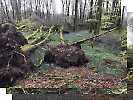
Storm Èowyn wrought a lot of damage on its Irish visit this January past, and one of the most obviously vulnerable walking locations was the gorgeous beech woods at Mullaghmeen, the highest hill in Westmeath. ceadeile undertook a comprehensive tour of the trails on the hill in April, and was heartened to see how much work Coillte had done to tidy up the carnage, and by the display of bluebells softening what is still a considerably disrupted scene. Regardless of the climatic circumstances, this remains one of the very finest of the lower County Highpoints.

ceadeile on 9 km walk around Mullaghmeen Woods April 2025
Storm Éowyn, January 2025, caused enormous destruction to the beech woods at Mullaghmeen, especially on the southern si| walk, Len: 9.4km, Climb: 245m, Area: Mullaghmeen, North East Midlands (Ireland ... Click here ...";

Feature Article

↑ Table of Contents
Moel Sych

Welsh County Highpoints

Wales - another Celtic nation, lies just across the sea. It has a surprising number of mountains for such a small country. Now, the good folk of MountainViews like their lists; quite a few members have already climbed the 16 Welsh mountains over 3,000 feet. So, the question is what other Welsh list can be completed in a reasonable time frame? Well, the Welsh County Highpoints can...

Map of Wales

Wales - County Highpoints

There are currently 22 County Highpoints in Wales. However, between 1972 and 1974, two counties were amalgamated with their neighbours, resulting in the loss of both South Glamorgan and Radnorshire. Now whether you should include Great Rhos (Radnorshire) and Craig Lysfaen (South Glamorgan) in your list is a moot point. However, I will include them for pig iron and whether you choose to climb them is entirely at your discretion!

That makes a grand total of 24 peaks, and like Ireland, their average height is a little over 600 metres. However, if you have completed your 3,000 feet list, there is already some good news. In completing that list you have already climbed two county highpoints Yr Wydffa or Snowdon in Gwynedd at 1,085m and Garnedd Uchaf or Carnedd Gwenllian in Conwy at 926m. Here is a list of the rest:

Anglesey - Holyhead Mountain

(SH 21859 82948) Well if you have done the Welsh 3,000ers chances are you will have seen this one or perhaps climbed it whilst waiting for the ferry. Short climb along paths from the east. Height 220m

Flintshire - Moel Famau

Moel Famau

(SJ 16124 62674) This can be done as part of a treble with two other peaks. The large monument at the summit is the Jubilee Tower which can be seen for a long way. Park to the south at Bwlch Pen Barras. Height 555m

Denbighshire - Moel Sych

Moel Sych

(SJ 06631 31863) This can be done as part of a 16 peak circuit from the waterfall at Pistyll Rhaeder (along with Cadair Berwyn Boundary) just north of Llanrhaiadr-ym-Mochnant. That makes a long but ultimately satisfying day. Height 827m

Wrexham - Cadair Berwyn Boundary

(SJ 07165 32355) See Moel Sych above. Height 832m.

Cardiganshire - Pumlumon Fawr (Plynlimon)

Pumlumon

Fergal Hingerty on Plynlimon

(SN 78972 86945) My final Welsh county top done as part of a 13 peak circuit from the south west, starting at the parking spot Eisteddfa Gurig near the world famous (according to my Welsh climbing buddies) Elvis Rock! Height 752m

Pembrokeshire - Foel Cwmcerwyn

( SN 09410 31161) The closest hill to the Pembroke/Fishguard ferry is an easy climb along tracks from the village of Rosebush to the south west. Height 536m

Powys - Pen Y Fan

(SO 01210 21588) The most famous South Wales mountain. Track all the way from Storey Arms Car park but if a nice sunny summer day expect the multitudes and arrive early. Many Marilyns and hills can be added to this peak which is a gradual slope on one side and a sheer cliff on the other side. Height 886m.

Monmouthshire - Chwarel Y Fan

Chwarel Y Fan

(SO 25819 29417) Park in Capel-y-Ffin in the Black Mountains and head up track to ridge. Follow ridge to summit marked by a cairn, I did as part of 5 peak circuit heading north and a return down Gospel Pass. Height 679m.

Swansea - Mynydd y Betws

(SN 66474 09487) Find viewing platform to west and walk 100 metres from road to flat unmarked summit. Easiest summit in Wales. Height 373m.

Neath/Port Talbot - Craig Y Llyn

(SN 90688 03158) Short walk from road A4601 to summit marked by a trig pillar. Close to Craig y Llyn Boundary (100 metres). Height 600m.

Rhondda Cynon Taff - Craig Y Llyn Boundary

(SN 90976 03168) Short walk from road A4601 to summit marked by a stone way marker. Close to Craig y Llyn (100 Metres). Height 589m

Blaenau Gwent - Coety Mountain

(SO 23161 07996) Parked in the village of Blaina to the west, followed steep track to ridge and reached the unmarked summit as part of five peak circuit around the valleys there. Close to Torfaen County Top. (30 metres). Height 578m.

Newport - Wentwood

(ST 41133 94314) Parked in carpark and followed forest trails to very close to summit. Trees felled recently so easy to reach trig pillar, nearby is superb view of Severn Crossing. Height 309m.

Cardiff - Garth Hill

(ST 10341 83506) Close to Taffs Well, park to south east for a surprisingly steep hill with extensive views of Cardiff. Marked with a trig pillar. Height 307m.

Bridgend - Werfa

(SS 91278 94774) Parked at layby for windfarm on A4061 and walked along track to near communications tower. The lightning blasted trig pillar is unusual to see. Height 568m.

Carmarthenshire - Fan Foel

Fan Foel

(SN 82148 22347) Overlooked by its Brecon Beacons cousin to the east Pen Y Fan this is harder to access, more beautiful and has less crowds. Worth the effort, parked to North west at rough car park and did as part of an eight peak ridge walk and a return above the lakes along a narrow path halfway up cliff. Best county top in Wales in my view. Height 781m.

Caerphilly - Pen March

(SO 08222 11086) Did as part of 3 peak circuit from the dam at Pontscill reservoir. Top is marked by a small pile of stones but hard to locate. Close to Merthyr Tydfil County Top. (200 Metres) Height 535m.

Merthyr Tydfil - Merthyr Common

(SO 08023 11028) Did as part of 3 peak circuit from the dam at Pontscill reservoir. Top is marked by a small pond but hard to locate. Close to Caerphilly County Top. (200 metres) Height 531m.

Torfaen - Coety Mountain Boundary

(SO 23337 07924) Parked in village of Blaina to the west followed steep track to ridge and reached the unmarked summit as part of five peak circuit around the valleys there. Close to Blaenau Gwent County Top. (30 metres). Height 574m

Vale of Glamorgan - Tair Onnen

(ST 03663 73984) Trig pillar in field to south near road beside solar farm. Not currently listed in Mountainviews.

South Glamorgan - Craig Llysfaen

(ST 18997 85086): Leave the M4 at junction 30 and head north west to parking spot either west or east of summit then it’s an easy stroll along path to trig pillar with great views over Cardiff. Not shown on map or currently listed in Mountainviews.

Radnorshire - Great Rhos

(SO 23337 07924) (SO 18220 63902) can be done as a horseshoe circuit of 6 hills just north of village of New Radnor. Height 660m


We have 3 joint county top summits in Ireland Cavan/Fermanagh, Limerick/Tipperary and Wexford/Carlow. In Wales there are 4 joint summits close to each other Torfaen/Blaenau Gwent, Caerphilly/Merthyr Tydfil, Denbighshire/Wrexham and Neath Port Talbot/Rhondda Cynon Taff. Most of these mountains and hills have tracks. Therefore, they are easily accessible, providing another easy list to complete.


-- Fergal Hingerty

Feature Article

↑ Table of Contents
Kippure

Kippure - Its Surrounds and History

Kippure is a prominent landmark mountain on the South Dublin-Wicklow county boundary, and is a familiar sight to all Leinster hillwalkers. It is the highest summit in the Dublin Mountains as can be seen in the County Highpoints list. Kippure is 32nd highest peak in Ireland according to the MountainViews Highest 100 list. It is also fearured in the Arderins and Vandeleur-Lynam lists. To climb Kippure you can start from the Kippure Transmitter Gate.

Map of the Area

Map of the area

The summit of Kippure consists of extensively eroded peat, exposed granite sands and granite blocks. Its peak is capped by the 127 metre(m) high TV transmitter mast and the now unoccupied control station. At an elevation of 757m, Kippure sits between two large valleys: the valley of Glencree (part of County Wicklow) to the east, which it forms with Tonduff (642m), Maulin (570m) and Knocknagun (555m) and the valley of Glenasmole (part of Dublin) to the north, which it forms with Seefingan (724m), Seefin (621m) and Corrig Mountain (617m).

Kippure in Irish

The origin of Kippure's Irish name "Cipiúr" is somewhat obscure and much debated, some claiming the translation means "a place of yew trees". Another old Irish name "Ciop Mhor" (Big Hill) may be a closer translation and could also mean a great expanse of coarse mountain grass. Before 1825, a pole was placed at the summit of many mountains, including Kippure. This was for visual surveying and triangulation measurements. This pole predated the trig pillar seen today, which dates from the 1930s. Thus, in the 1800's, the local inhabitants called Kippure "The Pole".

The locals called Kippure "The Pole"

The route up Kippure

The route up Kippure

Rivers

Kippure is the source of two of Dublin's most important rivers, the Liffey and the Dodder. These rivers were harnessed by dams many years ago to create reservoirs at Poulaphouca, Golden Falls, Leixlip and Bohernabreena, to provide drinking water and electricity to the greater Dublin area. The Liffey rises on the south side of Kippure about 580m above sea level. The actual spring is located about 10m from the Military Road at Liffey Head Bridge, about halfway between Glencree and the Sallygap crossroads. It flows into the Blessington reservoir where it is joined by King's River flowing from the south. The confluence then flows into County Kildare.


Lower Lough Bray

Lower Lough Bray

Along the Military Road near Lough Bray is the site of the famous McGuirk's Tea Rooms, a popular watering hole for walkers, artists, literati, and Bohemian types in the early 20th century. Amongst the many famous visitors to McGuirks were J.M Synge, Oliver St John Gogarty, Arthur Griffith, William Orpen, Austin Clarke, Harry Kernoff and many more. (See Michael Fewer's excellent recent book "Tales from a Wicklow Tea Room 1898 - 1960" for an interesting in-depth history of McGuirks).

McGuirk's Tea Rooms circa 1928

McGuirk's Tea Rooms circa 1928. UCD Folklore Dept.

Geology and Topography

The Wicklow Mountains were shaped by two major geological processes: the intrusion and cooling of magma deep beneath the Earth's surface during the period roughly 490–390 million years ago, and later sculpting by Ice Age glaciation. The granite that dominates the range is an igneous rock, formed when molten rock cooled slowly underground, allowing large crystals of quartz, feldspar, and mica to develop. Over time, erosion exposed this granite at the surface. Many of Dublin’s notable public buildings were constructed from Wicklow granite.

The next natural event to shape the Wicklow mountains was the Ice Age. Massive ice sheets, thousands of metres thick, covered much of Ireland, creating an Ice Age or glacial period. The Ice Age and the subsequent melting of ice, thousands of years ago, resulted in the creation of valleys, rounded mountain peaks and lakes. As the ice melted, it scraped and eroded the colder north faces of the massifs leading to the formation of corrie lakes at the bottom of the mountain. Lower Lough Bray at the base of Kippure and the nearby Lough Tay, Lough Oular and Cleevaun Lough are all corrie lakes.

Extensive Blanket Bog at Kippure

Extensive Blanket Bog at Kippure

At the end of the ice age, as the glaciers retreated, peatlands and bogs were formed at high latitudes. Peat is formed from crushed and compressed vegetation, when trees, mosses, grasses, heathers and other plants accumulate, under acidic and anaerobic (oxygen deprived) conditions. As it develops, the peat sucks in and traps water. This slowly creates extensive marshy wetlands known as blanket bog. Extensive bogland covers the flanks of Kippure. It is over six foot in depth in places with dangerous bog holes and wet marsh.

Cutting Turf

Cutting Turf

The blanket bog around Kippure and its valleys was extensively harvested during "The Emergency" (the state of emergency which existed in Ireland during the Second World War) to supply Dublin with fuel. The army, government-employed labourers and local day trippers cut turf on Kippure during the mid-1940s. A bog road was built at that time to allow access for the turf cutters. Locally known as Moat Road, this path is used by hill walkers nowadays as a route to Kippure's summit from a road entrance just above Glencree crossroads.

Promotion of Turf Cutting - Irish Press 1943

Promotion of Turf Cutting - Irish Press 1943

Folklore of Finn McCool

In ancient times, Kippure and the nearby Glenasmole valley and mountains were covered by trees, and according to legend, they were the local hunting grounds of Fionn Mac Cumhaill (Finn McCool) and his band of followers, Na Fianna. The names of the nearby mountains Seefin (Seat of Finn), Seefingan (seat of young Finn) and Ballymorefinn attest to this alleged connection with the famed Finn McCool (who is also associated with the Giant's Causeway in Antrim and Fingal's Cave in Scotland). The "Finn McCool Stone" lies in Castlekelly bog in Glenasmole.

Finn McCool Stone, Castlekelly, Glenasmole

Finn McCool Stone, Castlekelly, Glenasmole

The Trig Pillar

The ordnance survey of 1825 used Kippure summit as one of its key measuring points. From the pole on the summit, triangulation measurements were made to other poles on other summits. The mapping was done by triangulation and by creating a series of primary triangles. Sightings were taken between stations using theodolites. Much of this work was done at night to reduce the distortion caused by heated air. A crucial part of this mapping of Ireland was the careful and accurate measurement of the Lough Foyle baseline triangle, stretching for 8 miles. This was the only baseline in the country that was actually measured. The work was completed over 60 days between September 1827 and November 1828. An original apparatus, "Colby's bar" was used to measure the baseline. This bar, called a "compensation bar", was extremely accurate and was a dual arrangement of brass and iron, The Lough Foyle Baseline was remeasured again in 1960, using a system of reflected microwave radio waves (tellurometry - a form of trilateration, where distances rather than angles are measured). The result differed from the 1828 value by only 2.5cm, a convincing demonstration of the precision of the original earlier survey. The concrete trig pillar familiar to today's hillwalkers was finally erected on Kippure in 1932 for subsequent trigonometrical surveys using theodolites.

The Trig Pillar in front of the TV mast

The Trig Pillar in front of the TV mast

The Ordnance Survey of Ireland began their retriangulation of Ireland in 1959. Many of the points observed in the principal triangulation of the nineteenth century were incorporated in the new scheme. New triangulation stations, in the form of the familiar concrete pillars (trig pillars) seen on many hill tops, were erected at the time.

Telefís Éireann(T.E)

Ireland's national television station Telefís Éireann (T.E), as it was known then, opened on New Year's night 1961. In 1959, after a survey was completed by Radio Éireann engineers and the Office of Public Works (OPW), Kippure was selected as the site of the first TV mast on account of its height, its unobstructed view and its proximity to Dublin.

Work on site

Work on site

The sixteen acre site around Kippure was bought from the Powerscourt estate. In 1959, clearing of the bog road and the building of a new 5km access road from the Military Road to the construction site at the summit began.

Pye Ireland were the overseers of the Kippure operation, and CG Cooney of Dublin were the building contractors. The mast would be 108m (355') above ground level at a total elevation of 262m (2820') on Kippure summit. A Norwegian firm (Huso Verft) was contracted to build the mast offsite and it arrived at Dublin port in June 1961 in thirteen sections each section 9m long and weighing tons. Work began clearing the site in October 1960, and erection of the mast began in June 1961.

Guy ropes Hold up the mast

One of the eight steel cable guy rope anchorage points

Eight large steel guy ropes supported the mast, while the mast itself was attached to a five foot square reinforced concrete base fixed into the granite bedrock. Expansion bolts and steel connecting rods were built into long holes drilled into the core of the mountain granite. The mast was painted bright yellow and was fitted with night obstruction lights at various heights. Due to deep snow, freezing fog and sub-zero temperatures on Kippure, work had to be suspended intermittently. The adjacent single story control room station was built on a reinforced concrete base and covered an area of 465 m2 ( 5000 sq. feet). It had 18 modular units, comprising accommodation, living rooms, control rooms, stores, transmitter, transformer and test rooms. It was staffed by a minimum of three people. TV pictures were beamed by microwave link from giant paraboloid reflectors at Montrose studios to Kippure, which then broadcast them over the Leinster area and forwarded the signal to other transmitters around the country.

Five National Transmitters

Five National Transmitters

By the summer of 1961, construction of the mast and station was completed. A test card with a picture of the round tower at Glendalough was used to test transmisision over a preparatory period of a few months. The transmitter was formally handed over on 5 September 1961 to the Radio Éireann Authority, who sent out the St Brigid’s cross symbol to television sets in the eastern area tuned to channel 7 until opening night on New Year’s Eve 1961. The cost of construction of the Kippure station was £105,000. Other transmitters were subsequently erected on other mountain peaks to radiate the TV transmission over the country.

The Big Snow

The winter of 1962/63 saw one of the heaviest and most prolonged snowstorms to hit the country for very many years. Continuous blizzards, with blankets of deep snow and huge drifts, covered the country for many weeks. The fledgling station at Kippure was entirely cut off and the access road was impassable to traffic because of 20-foot snowdrifts. The three men manning the station at Kippure were completely isolated and were snowed in for five days.

Skiing to work at Kippure

Skiing to Work at Kippure - January 1963

The big snow and the Kippure station featured prominently in the national newspapers in January of 1963, as TV transmission was often affected due to power line problems on the summit. Bulldozers attempted to clear the access path from the Military Road and An Oige helped with the delivery of supplies. Eventually helicopters were used for food drops. Employees had to use skis to access the station.

The Troubles - Security Issues

In the early 1970s, due to the Troubles in Northern Ireland and the increased activity of paramilitary groups, it was felt that the transmitter at Kippure should be protected. Hence, members of the defence forces were posted to the summit in 1971 to guard the station and the transmitter. A land rover brought three army members from McKee Barracks to Kippure for twelve-hour shifts. They were armed with rifles and machine guns to prevent anyone gaining unauthorised access to the station. Regular hillwalkers who ventured too close had to be intercepted daily and parked cars, belonging to hikers, had to be checked out. In September 1971, armed men gained access to the transmitter, assaulted the night staff and overpowered and tied up the FCA guards. The attackers left, taking the FCA guards’ guns and ammunition with them.

Raid on Kippure

Irish Independent - Sept. 6th 1971

There was a strong public outcry following the raid and security at the station was immediately stepped up. No further security breaches took place at Kippure.


-- Tom Barragry

Summiteers Corner

↑ Table of Contents

Islands

When we first compiled our list of 588 sea islands, we expected fewer than 100 would be accessible without a boat. However, our community members have now identified 103 islands that can be reached by foot at low tide, via bridge, or by scheduled public transport.

This number will likely change as more information becomes available. Currently, 17.5% of our listed islands are accessible without boating equipment - creating a valuable resource for walkers who don't have access to sea kayaks or other watercraft.

Selected list figures

Here's a few hopefully interesting figures on our new lists, etc.
List Name Number of Summits / Islands Number of Finishers Remarks
Range & Area Highpoints 77 1 5 have visited 60 or over
Highest 50 Per Province 200 3 18 have visited 180 or over
Irish Islands 588 0 3 have visited 150 or more
Irish Island on foot 103 - -

Recent Surveying

MV's Index Area Sub area Summit Name Height Prom. Map Grid Ref Notes
458 Mourne Mountains W: Spelga Butter 503.8 J27481 27960 Confirmed as Arderin.
279 Caha Mountains W: Eskatarriff Coomacloghane 598.9 V73265 54809 Confirmed as not Arderin
1476 Caha Mountains W: Eskatarriff Knocknaveacal S, New Position 512.7 V74180 55884 as suggested DoBIH
1475 Caha Mountains W: Eskatarriff Knocknaveacal N, New Position 512.7 V74335 56195 as suggested DoBIH
Caha Mountains W: Eskatarriff Keeragh Mountain 363.2 V73309 56885 New entry
175 Caha Mountains Cen: Knockowen Knockowen 660.3 V80863 55386 Routine measurement.
287 Caha Mountains Cen: Knockowen Cushnaficulla 596.9 64.0 V82216 55884 Not a VL
1056 Caha Mountains Cen: Knockowen Knockeirky 579.7 39.4 V83217 55729 Knockeirky confirmed as Arderin, substantially.
1470 Caha Mountains Cen: Knockowen Knockeirky South 522.5 28.3 V82738 53727 Knockeirky S, confirmed not an Arderin
456 Caha Mountains N: Coomnadiha Knockreagh Possible 2 499.1 V82704 61329 Highest Value of 3, demoted from Arderin
0 Ox Mountains Ballygawley Mountains Slieve Daeane 273.1 G71190 29942 Routine measurement.
0 Ox Mountains N: Sligo Hills Killerry Mountain 292.9 G75109 31695 Routine measurement.
1073 Wicklow Mountains W: Baltinglass Cloghnagaun Summit 379.5 S92578 88922 Routine measurement.
1436 Maamturks N: Leenaun Leacan 556.8 30.2 L86157 60379 Confirmed as Arderin, probably
1412 Maamturks N: Leenaun Meall Cheo 578.0 26.6 L86075 59736 Confirmed not Arderin
246 Maamturks N: Leenaun Leenaun Hill 616.0 L87444 59334 Routine measurement.
1519 Maamturks N: Leenaun Lettershanbally Top 323.0 L83765 59059 Routine measurement.

Website News

↑ Table of Contents

New Newsletter Format

In the past, we sent either email newsletters (which were often altered by email providers) or PDF attachments (which were difficult to read on mobile devices). This new approach makes our content more accessible and hopefully more aesthetic. We'd appreciate your thoughts on this format.


Revised Place Listing

We reported in January 2025 that we were working on a new version of the “Summit Listing” page of the website. We have now arranged that this is the regular version that you can use for getting lists of summits.

The new system will work properly on mobile and tablet screens as well as laptops and PCs. The new version adds two new lists: “Range & Area Highpoints” and “Highest 50 Per Province”.
Try the new listing here The background to these is available at this newsletter.

Range & Area Highpoints list

The new Range & Area Highpoints list.


Volunteering- Newsletter Layout

Could you maintain or improve the layout of this newsletter? It's in HTML format and if it's a skill you have and you are interested, do talk to us. Let's chat about helping with the newsletter

Other volunteering.

We are always looking for volunteers to help with the website and running of MountainViews. admin -at- mountainviews.ie

Challenge Walk Notes

↑ Table of Contents

MountainViews Challenge Walks Calendar

Challenge Walks 2025

So what's the outline info for Challenge Walks 2025? (6 were Sold Out, whereas the Causeway Challenge Walk can cope with 'any number' on the day):

  • MaamTurks Challenge - Held on 12th April
  • KnockMealDown Challenge - Held on 26th April
  • Causeway Challenge Walk - Held on 4th May
  • BlackStairs Challenge - Held on 17th May
  • Clare Burren Marathon Walk - Held on 24th May
  • Tom Crean Endurance Walk - Held on 21st June
  • Galtee Challenge - On 28th June (Sold Out) was a fine success, even if low cloud greatly affected visibility on the day.
  • Comeragh Challenge & Crossing - Both held on 5th July

And Still to Come:

  • Joyce Country Challenge - 19th July (Registration still open)
  • Fei Sheehy Triple Challenge - 8th-10th August (Sold Out)
  • Mourne Seven Sevens - 9th August (Sold Out)
  • Connemara Walking Marathon - 9th August (Sold Out)

Looking Ahead to 2026:

The Tom Crean Endurance Walk has quickly announced its date for next year: TCEW 2026 will take place on Saturday 20th June. Registration will open on 7th February.

Knockanaffrin

Knockanaffrin.

About this Newsletter and MountainViews

↑ Table of Contents